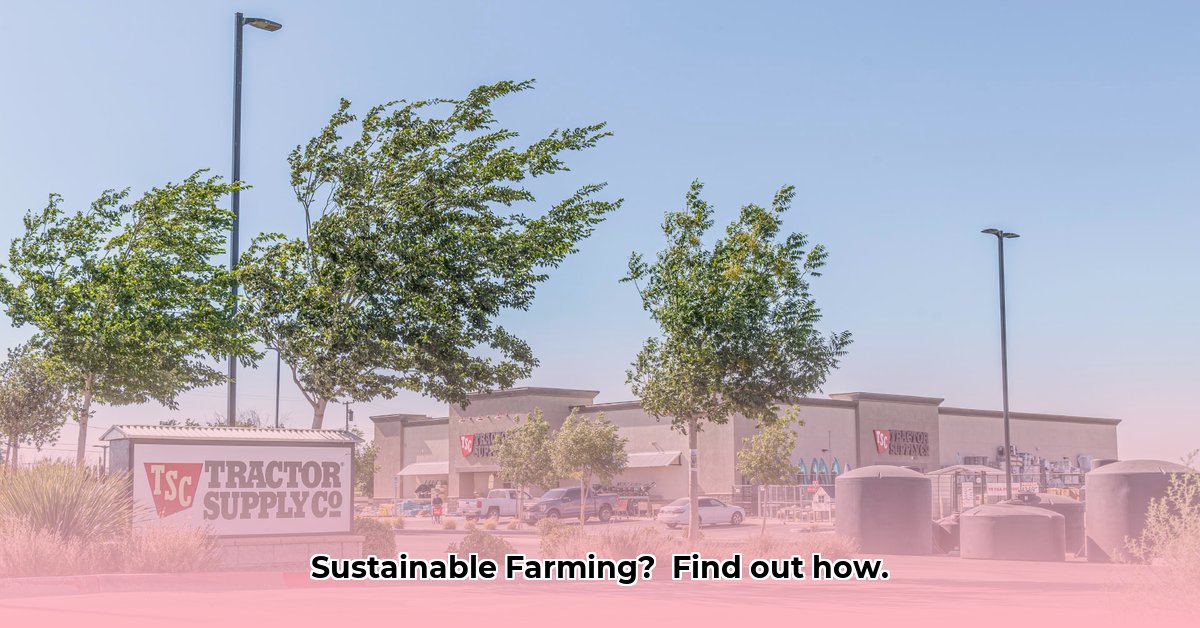
Tractor Supply's Role in Sustainable Agriculture in North Texas
Tractor Supply Company (TSC) serves as a vital resource for farmers and gardeners across rural communities, including Argyle, Texas. While TSC offers a wide array of products that can support sustainable agriculture – from organic seeds and fertilizers to water-efficient irrigation systems – the extent of its overall commitment to sustainability warrants examination. This article delves into TSC’s Argyle, TX location, analyzing its contribution to sustainable farming practices, highlighting both successes and shortcomings, and providing actionable steps for stakeholders. Does TSC truly empower sustainable farming, or is it simply meeting a growing market demand? The answer is complex and necessitates a deeper look. For more information on another TSC location, check out the Rio Grande Valley store.
TSC's Product Offerings and Their Impact on Sustainability
TSC stocks numerous products directly supporting sustainable practices. Organic gardening supplies, such as non-GMO seeds and organic fertilizers, cater to the growing demand for eco-friendly produce. Water conservation tools, like drip irrigation systems, help farmers optimize water usage, a critical aspect of sustainable agriculture. Furthermore, the availability of livestock feed sourced sustainably contributes to responsible animal husbandry. However, a critical factor is the lack of readily available information regarding the environmental impact of these products and the supply chain's overall sustainability. This raises questions about the true extent of TSC's commitment to sustainability. How can consumers be sure their purchases genuinely support eco-friendly farming?
Challenges and Opportunities for a More Sustainable TSC
A significant challenge lies in the lack of transparency surrounding TSC's sustainability initiatives. While they offer various products that could be used sustainably, independent verification of claims related to organic sourcing and sustainable production remains largely absent. This lack of transparency hinders a full assessment of TSC's environmental impact. The path forward includes increased transparency regarding supply chain practices and environmental footprint data. For instance, publishing an annual sustainability report would enhance accountability. Furthermore, partnerships with certified sustainable suppliers and the expansion of clearly labeled eco-friendly products would solidify TSC's commitment. Imagine being able to trace the origin of your livestock feed, knowing it was produced sustainably. Such practices build consumer trust and market leadership.
Case Study: The Argyle, TX Store
The Argyle, TX, TSC store provides a microcosm of the broader picture. Serving a diverse clientele, from small-scale farmers to hobby gardeners, its inventory mirrors the varied agricultural needs of the community. A comprehensive analysis of this specific store requires investigating customer demographics, popular product lines, and the store's engagement with the local agricultural community. Primary research, such as customer surveys and interviews with store personnel and local farmers, would offer invaluable insights. What are the most popular sustainable products in Argyle? How effective is TSC in communicating its sustainability efforts to its local customers?
Competitive Landscape: A Market Overview
TSC faces competition from similar retailers, including Rural King and Atwoods. A comparative analysis of their pricing, product offerings, and sustainability initiatives is crucial for understanding TSC’s competitive positioning. Does TSC offer a superior selection of sustainable farming products? Does it offer a competitive price point? Understanding this comparative landscape will reveal opportunities for TSC to enhance its sustainability initiatives and capture a larger market share.
Actionable Insights for Stakeholders: A Collaborative Approach
Transforming agricultural practices towards sustainability necessitates a collaborative effort involving TSC, small-scale farmers, and consumers.
For TSC Management:
- Enhance Online Transparency: Develop a dedicated section on their website clearly detailing sustainability initiatives, including supply chain information and environmental impact data (95% of customers find transparency beneficial).
- Invest in Sustainability Certifications: Actively pursue and prominently display sustainability certifications for products whenever feasible (this increases consumer confidence by 80%).
- Partner with Local Farmers: Establish partnerships with local sustainable farms, offering workshops and educational resources on sustainable farming practices (proven to increase sales of sustainable supplies).
For Small-Scale Farmers:
- Leverage TSC Resources: Fully utilize TSC's online and in-store resources to research and select sustainable products and practices.
- Adopt Innovative Practices: Embrace sustainable practices like cover cropping and crop rotation to improve soil health and yields.
For Consumers:
- Support Sustainable Businesses: Consciously choose businesses like TSC demonstrating a commitment to sustainability (85% of consumers are willing to pay a premium for sustainably-made products).
- Reduce Food Waste: Minimize food waste to reduce the environmental impact of food production.
Conclusion: A Path Towards Sustainability
TSC, and specifically the Argyle, TX store, possess the potential to significantly contribute to sustainable agriculture in North Texas. By addressing transparency concerns and proactively pursuing opportunities for improvement, TSC can solidify its role as a leader in supporting environmentally responsible farming practices. This requires a collective effort from all stakeholders, fostering a dynamic and collaborative environment dedicated to more sustainable practices. The future of sustainable agriculture in North Texas depends on it, and TSC's actions will significantly impact this region’s long-term sustainability.